Teardown of a 1000$ voting machine
October 2017: in Lombardy, Italy, a consultative referendum asks voters to express their will in requesting particular forms of autonomy.
On the same day, Veneto does the same, but the two consultations differ from each other in method: while Veneto remains on traditional paper, Lombardy decides to rely on electronic voting and, spending 23 million euros, buys 24,700 voting machines from Smartmatic.
23 million, including hardware, software and support (that is, €931 per machine), the figure doesn’t sound too unreasonable, especially considering the possibility of reusing the tablets for future votes, and the plausible cost of hardening and developing the voting platform.
Soon, however, scandal breaks out when it is discovered that the tablets were purchased only for that vote, and their reuse becomes a utopia.
To try to extinguish the controversy, the voting machines are formatted and given free of charge to Lombardy’s schools, which however find them difficult to use because of their shape and very limited characteristics.
In 2026, Lombardy launches a tender for the free assignment of the voting machines, which ultimately are not collected by the winner.
Soon, the schools, finding no purpose for them, decide to get rid of them and some end up on the gray market: on Subito or eBay, sold for the most disparate amounts.
I managed to buy the last 5 I found for sale.
Equipment
The voting machine arrived still in its original cardboard box, sealed with paper tape on which the municipal stamp and the signature of the person in charge were still visible. The only thing I know about the buyer is that “he has an entire pallet of them,” but I wasn’t able to buy any more.
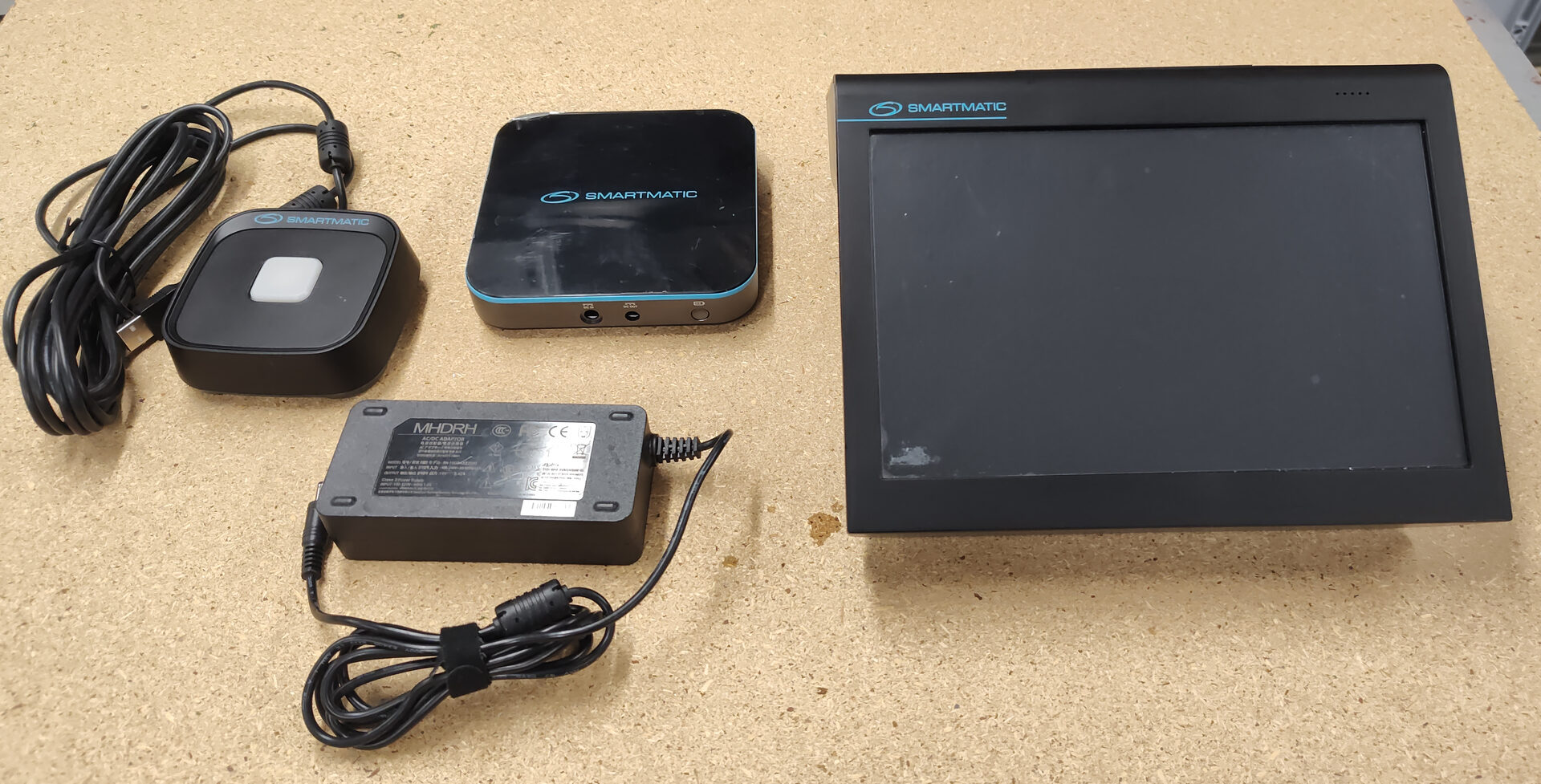
Abundant expanded foam protects the equipment, which consists of a voting machine, a powerbank, a button with a USB cable and the power supply.
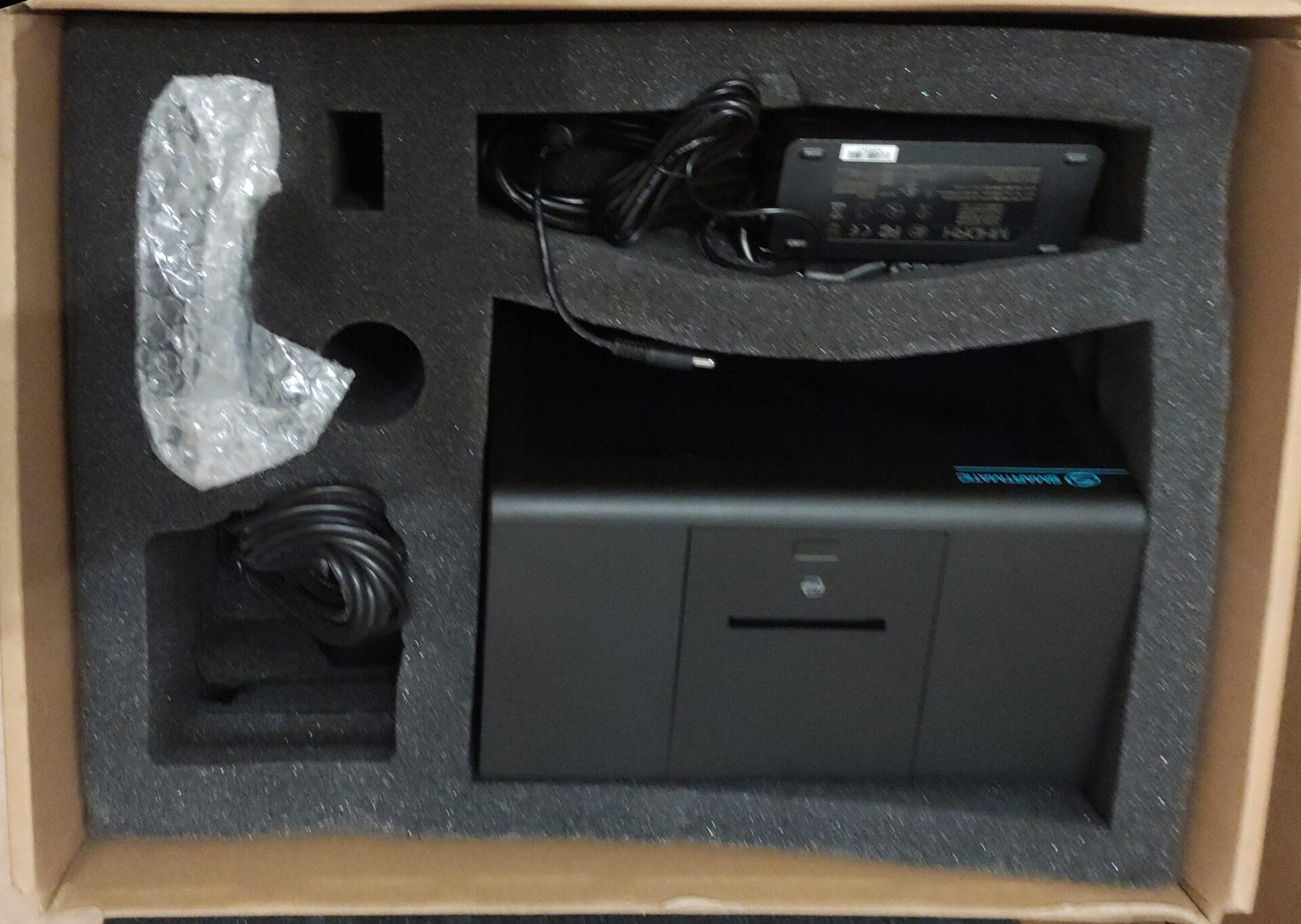
For the sale price (to the region), a plastic case would have been more convenient and secure, perhaps lockable with a padlock or a seal.
Machine
The machine appears more similar to a cash register than to a tablet, with the display too tilted both for standing use and for seated use.
On the sides there are two compartments that protect 3 USB 2.0 ports (mounted upside down) and the power input. The compartments can be locked semi-permanently by passing a padlock or a seal through the appropriate holes.
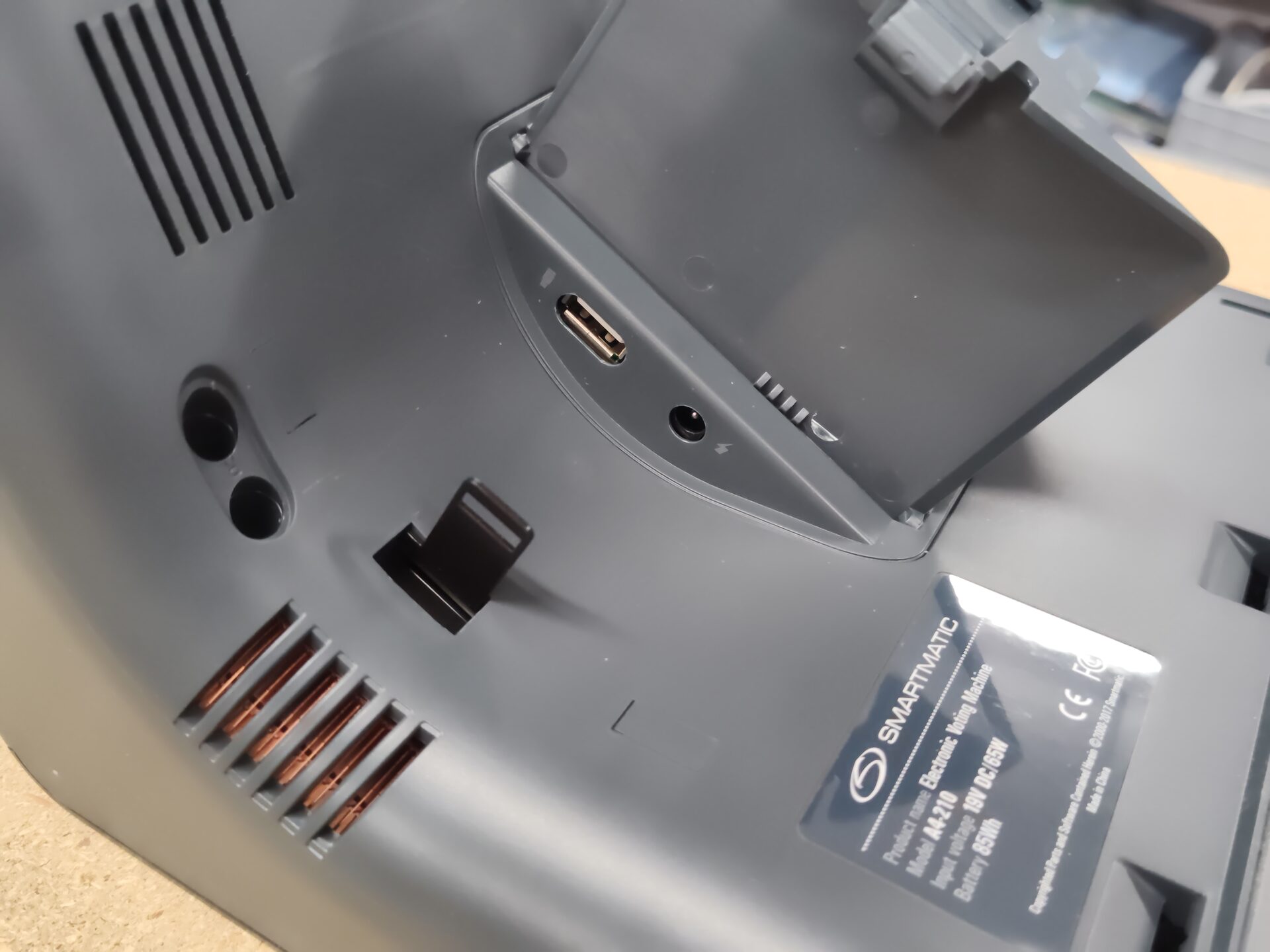
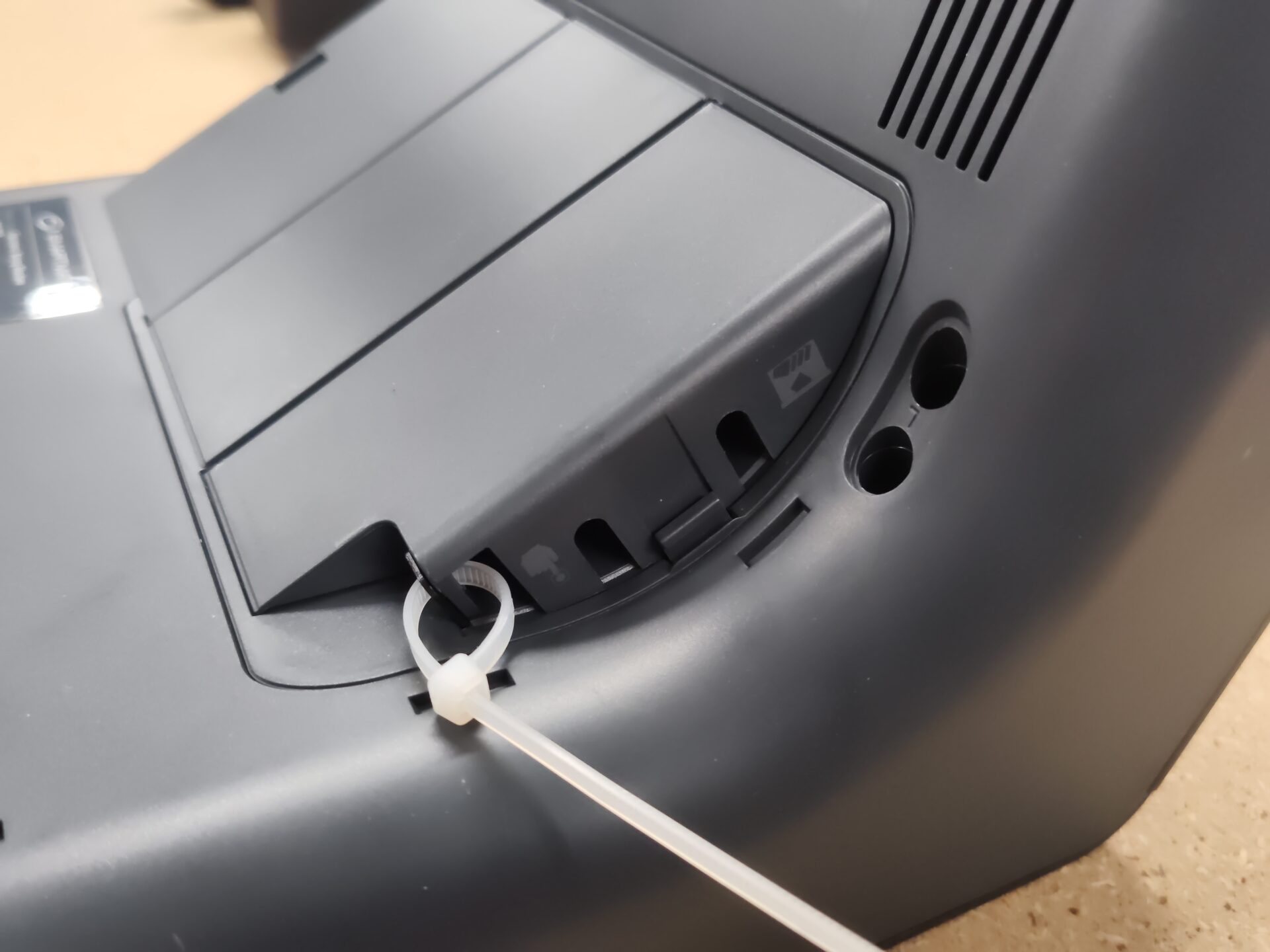
The connectors are difficult to reach and the compartments bang against the table if opened, forcing you to tip the machine over every time something needs to be connected.
Each USB port is marked with a different logo: a USB stick, a ballot box and a button. The ballot box probably has a sensor that certifies that each vote corresponds to an inserted sheet. The manufacturer, in fact, provides for the possibility of printing the vote and inserting it into the ballot box, allowing instant “digital” counting and subsequent verification of the “analog” votes.
On the back of the voting machine there is a thermal printer (ESC/POS protocol, manufactured by Brighteam Tech LTD) with a manual cutter, which accepts a very ordinary receipt roll. There is no security mechanism that prevents tampering with the roll.
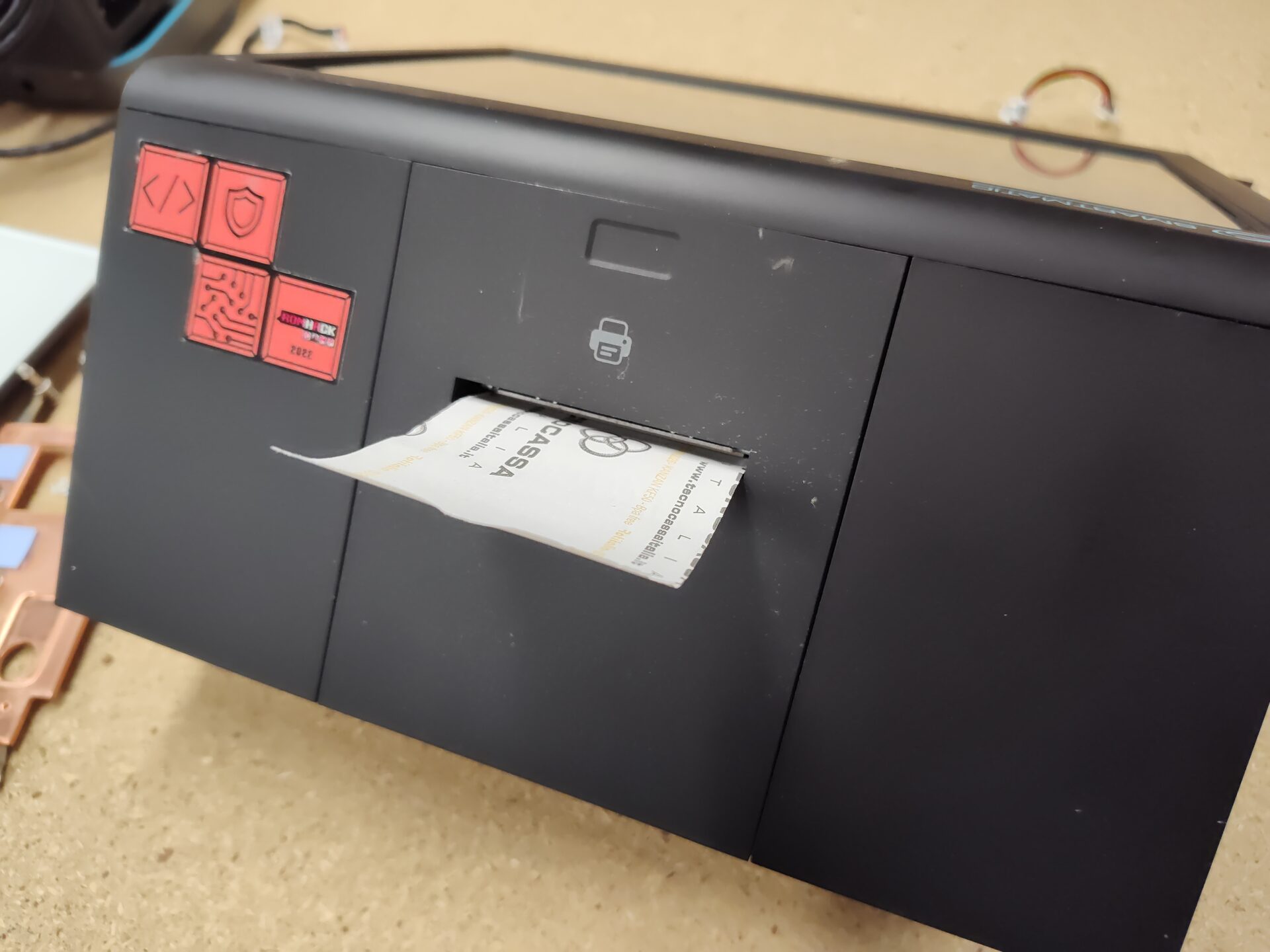
To gain access to the inside, it is necessary to remove 4 Phillips screws. There are no stickers or other seals that indicate tampering has occurred. The front and rear parts open “like a book,” revealing the contents of the machine.
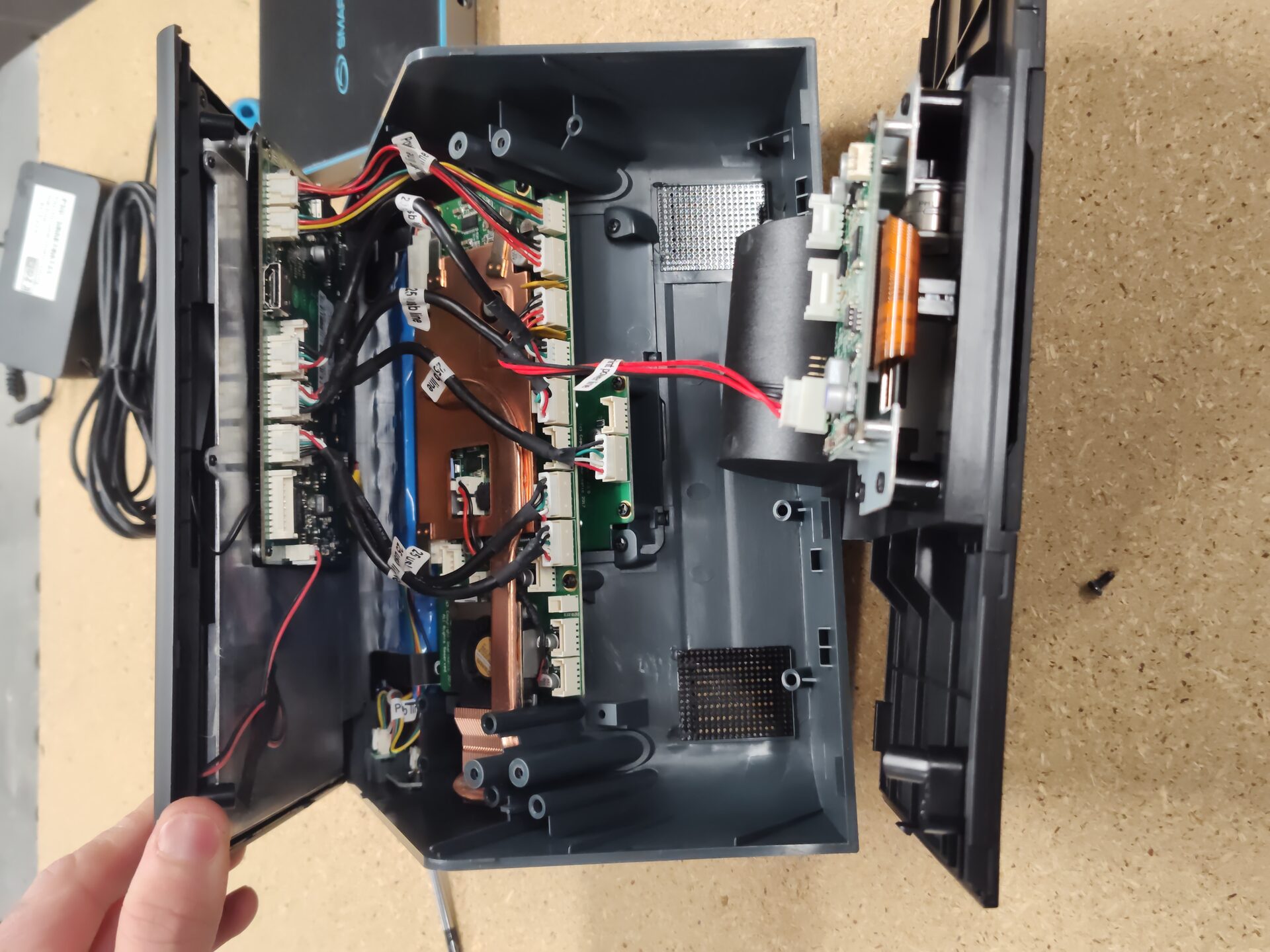
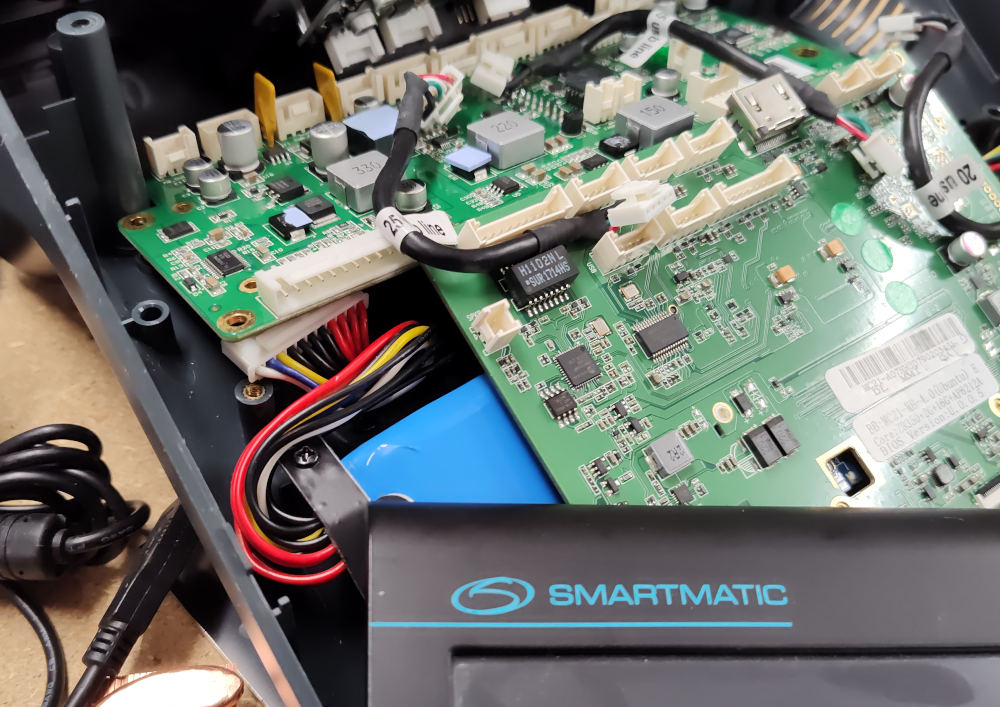
Behind the screen we find the computer that makes everything work. A label indicates the specifications: Intel Atom x5-Z8350 (4x1.44GHz), 2GB of RAM, 16GB of internal memory and a Wi-Fi and Bluetooth module. Through a hole in the PCB another blue board can be glimpsed, with an unpopulated connector, and there is a multitude of unused ports, including USB 3.0, NFC, microphone, an SD card, audio jack and Ethernet.
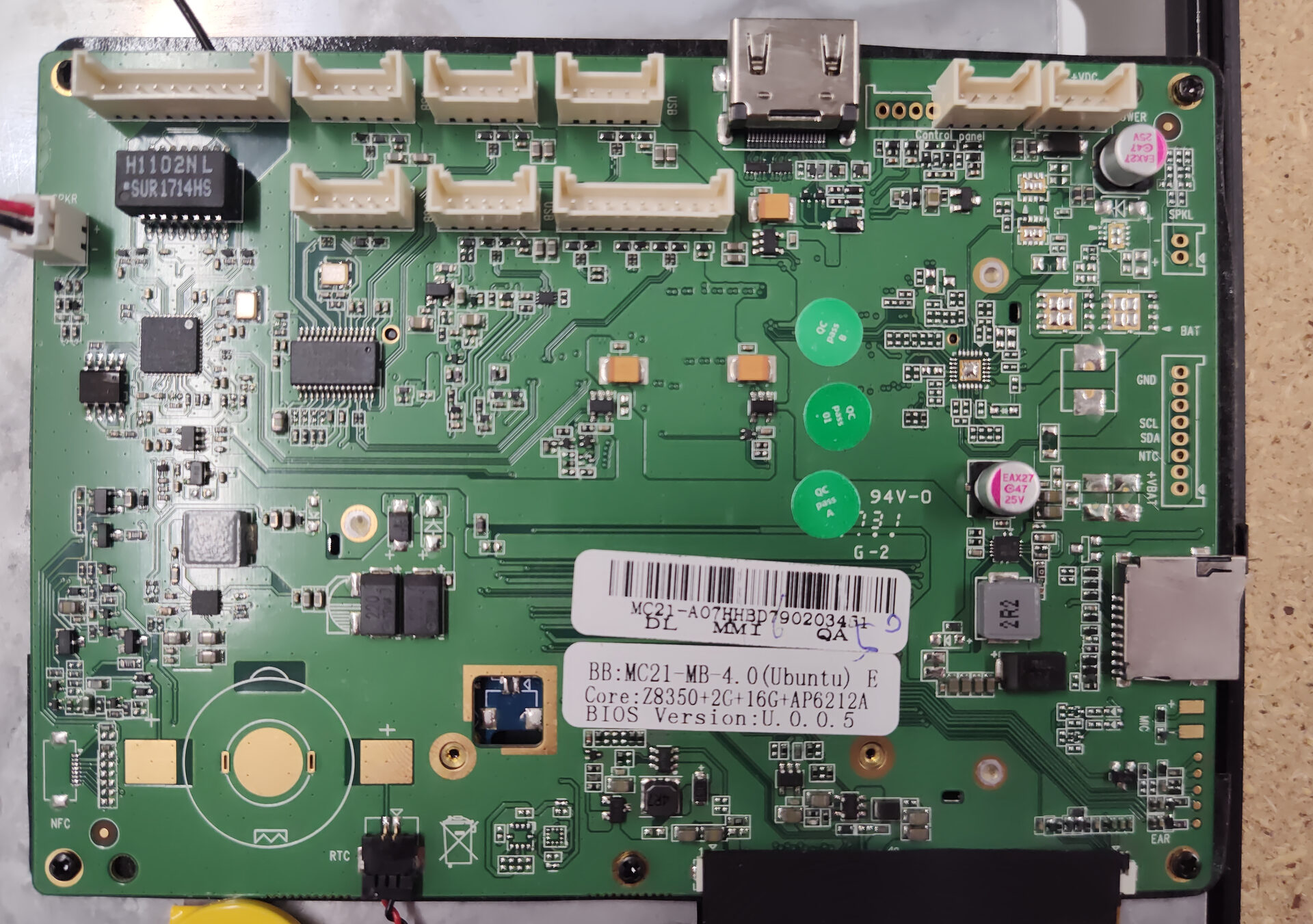
This suggests that this board is reused in multiple models, or is even a generic devboard from the manufacturer to which Smartmatic entrusted itself.
Among the components present on the board:
- Genesys GL850G: USB 2.0 hub with GPIO controller
- Davicom DM9601: USB to Fast Ethernet Adapter
The HDMI port is functional and allows connecting an external screen, although it is not usable without disassembling the machine. The board is mounted on a metal plate that covers the entire display, helping to cool the CPU without a fan. The only fan installed is dedicated to the charging and power circuit, but it is mounted on the “hub” board.
Removing the board from the display and turning it over reveals a SoM (system on module). These modules are very popular in embedded contexts, and allow integrating a computer onto a PCB by adding a single SO-DIMM connector. The module is protected with an additional metal cover, screwed on.
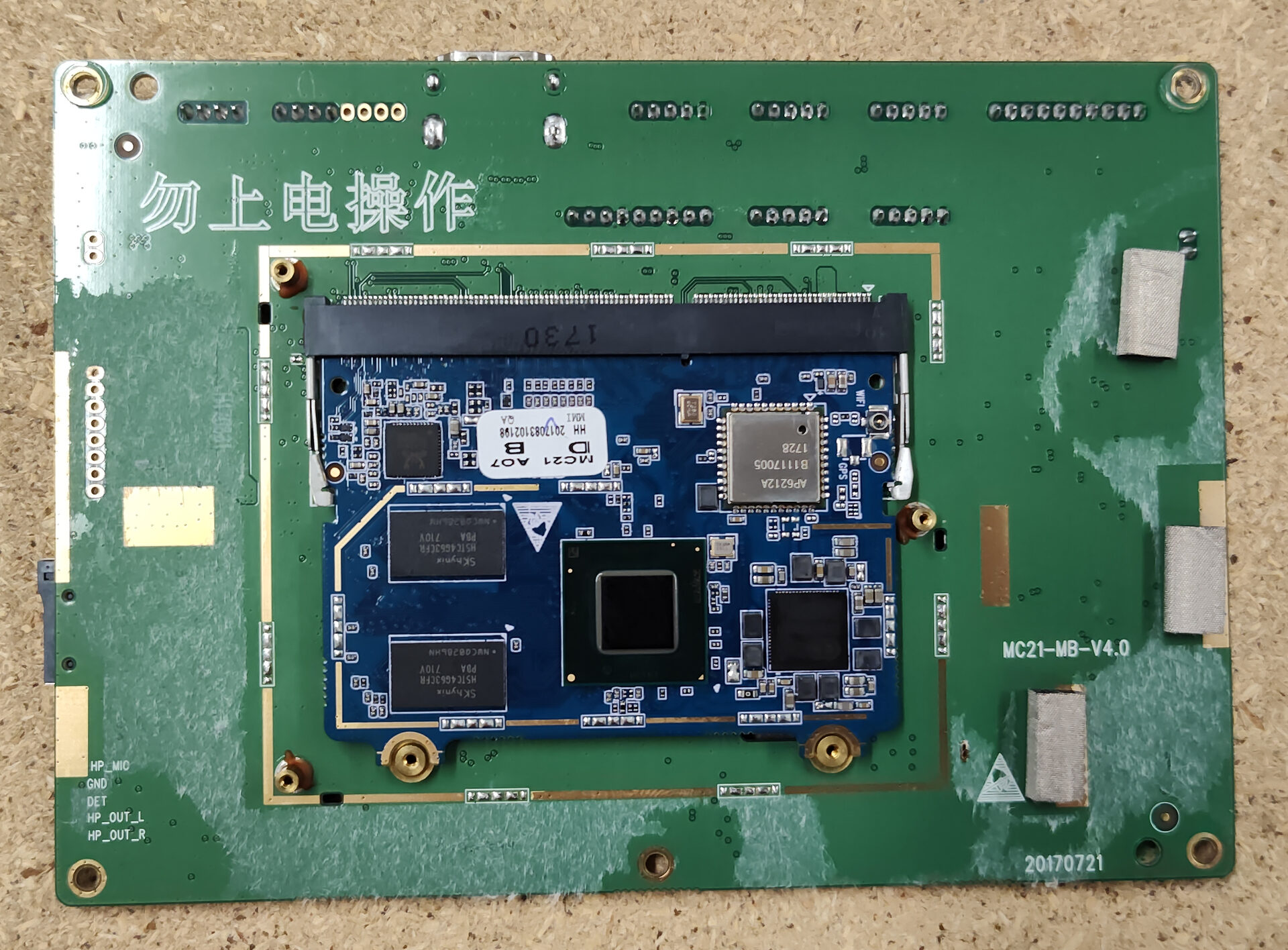
On all the boards there is the wording “MC21”, and Chinese characters stand out in various parts of the board.
Even searching thoroughly, it is impossible to find any info about the manufacturer. The boards that make up the entire system are in different styles and from different manufacturers; this suggests a mix of in-house design and external suppliers. The lack of brands and traceability, however, makes it impossible to trace the original manufacturers. Some boards have the wording “Brighteam Tech.”, which refers to a company that has a similar thermal printer among its products. This suggests that they may be one of the OEMs Smartmatic relied on.
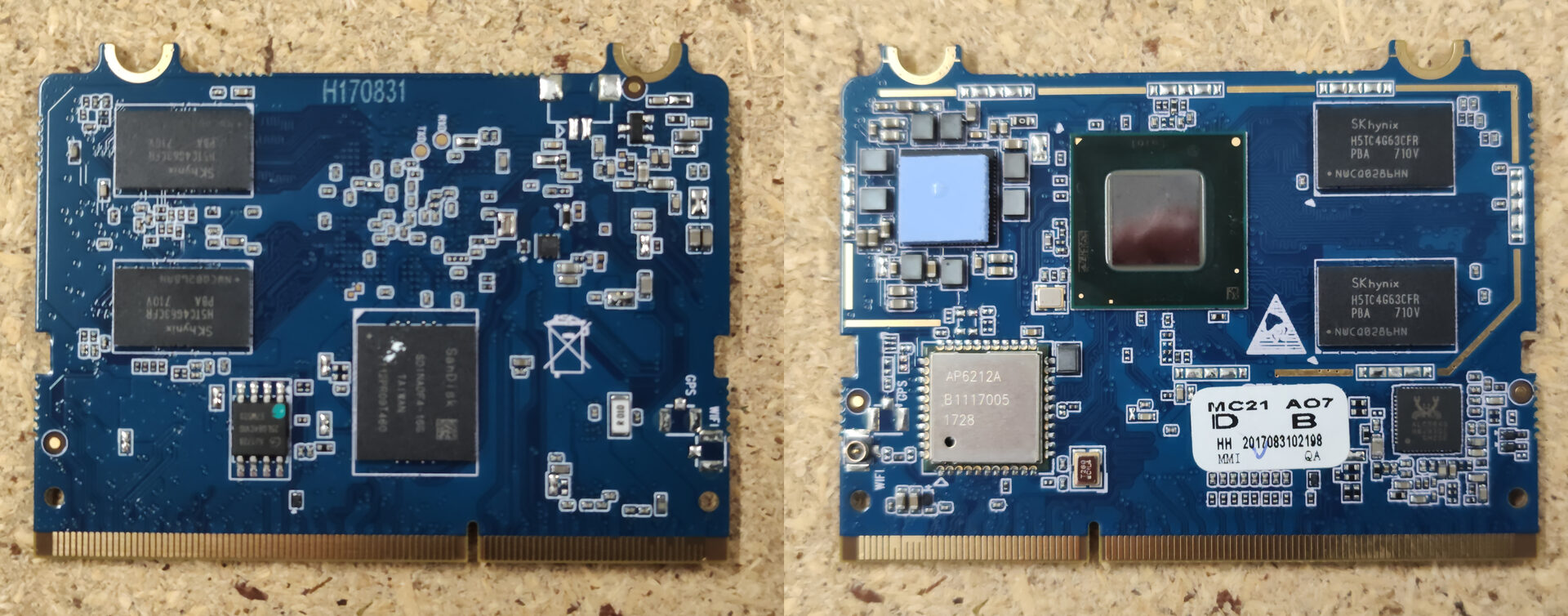
Among the components present on the SoM:
- 4x SKHynix H5TC4G83CFR-PBA: DDR3L RAM, 4gbit (2GB total)
- SanDisk SDINADF4-16G: 16GB eMMC NAND, internal memory
- GigaDevice 25LQ64CVIG: 8MB NOR Flash (BIOS)
- Realtek ALC5645: Audio codec
- Broadcom AP6212A: 802.11 b/g/n WiFi+BT 4.x Combo SiP Module
- X-Powers AXP288C: Highly integrated PMIC customized for Intel SoC
For a voting system, having Wi-Fi and Bluetooth clashes and increases the attack surface. Also curious is the presence of an audio codec and the related microphone connector.
The “hub” board
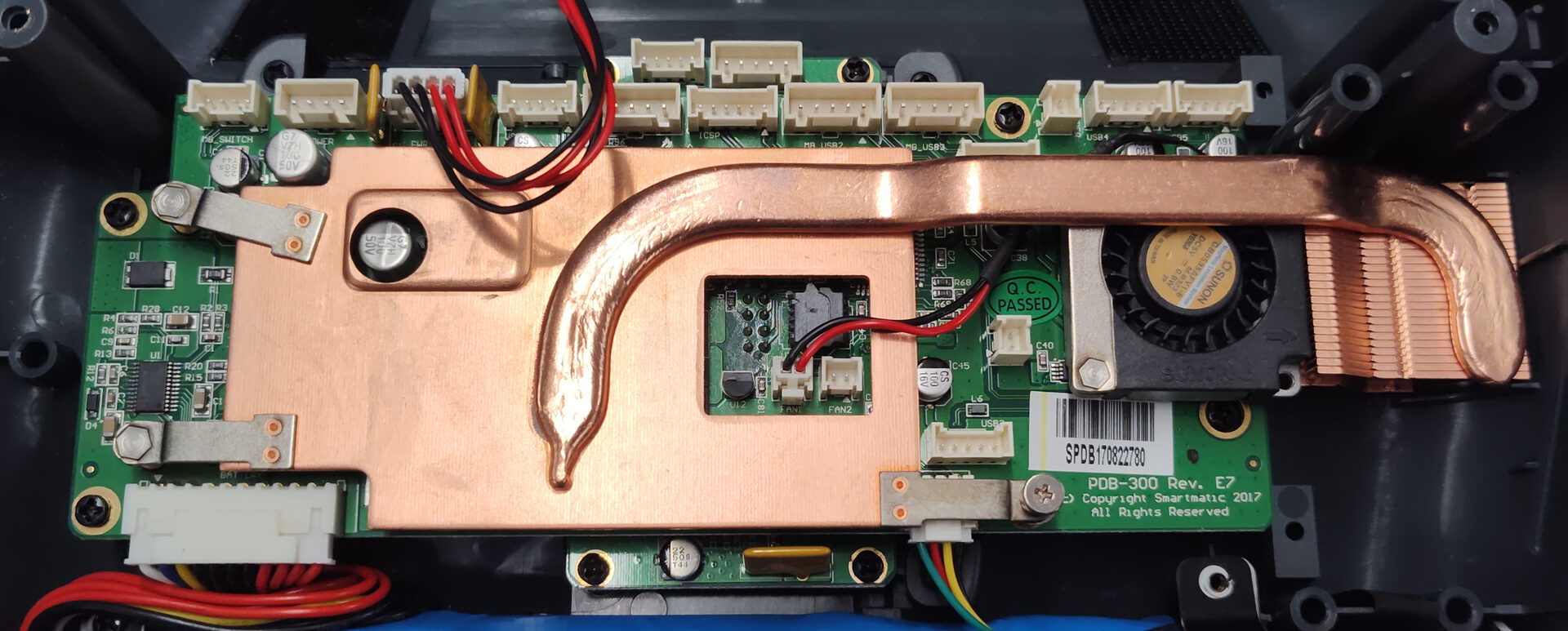
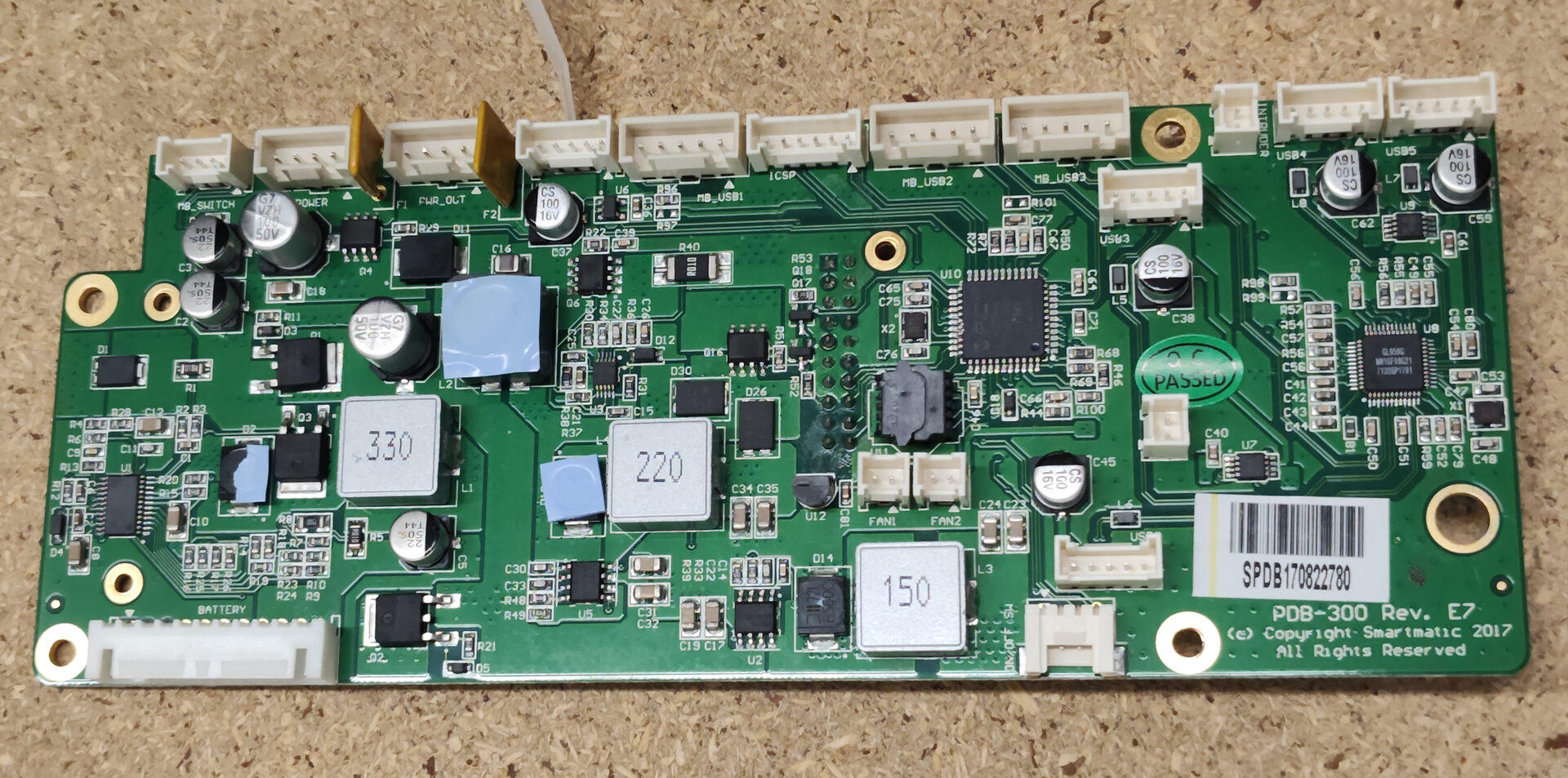
At the center of the machine there is a board that acts as a “hub” for all connections, power, and charge management. A large copper heatsink with an industrial fan allows moving heat outside the machine, through side slots.
The fan has no modulation: it stays off until a certain temperature threshold, then suddenly turns on at maximum speed. As expected, considering that it is a fan for industrial purposes, it is very noisy and not suitable for an office or school context.
The heatsink seems specifically designed for this board, but it proves avoidable with more careful design. The use of more efficient components would have made it possible to save several machining operations (CNC, bending and soldering of the heatpipe, construction of the heatsink…) while also achieving longer battery life.
Likewise, every interface has a dedicated connector, making it mandatory to assemble a cable for each connection. Replacing these cables with a single flat cable would certainly have saved money and complexity, delegating the actual connectors to modular components or high-current ones such as the printer, battery and buttons.
Among the components present on the board:
- TI BQ24702PW: battery charger controller
- Genesys GL850G: USB 2.0 hub with GPIO controller
- Microchip PIC32MX250F128D: 32-bit Microcontroller with Audio and Graphics Interfaces, USB, and Advanced Analog
- ST M24C64-F: 64-Kbit I2C-compatible EEPROM
The external battery
To avoid tangles of cables and the need to bring electrical power to the booths, each voting machine is supplied with a power bank.
When this is connected, however, the voting machine charges the internal battery, and accidentally creates a double conversion (power bank battery -> internal battery -> voting machine) that makes the entire system very inefficient.
After almost 10 years, all the batteries are now depleted and prove to be ballast inside the machine, which weighs 2kg.
The software
The machines have been reset with Ubuntu 16.04 LTS. The software part has already been covered multiple times, and a GitHub repository is available that includes everything needed.
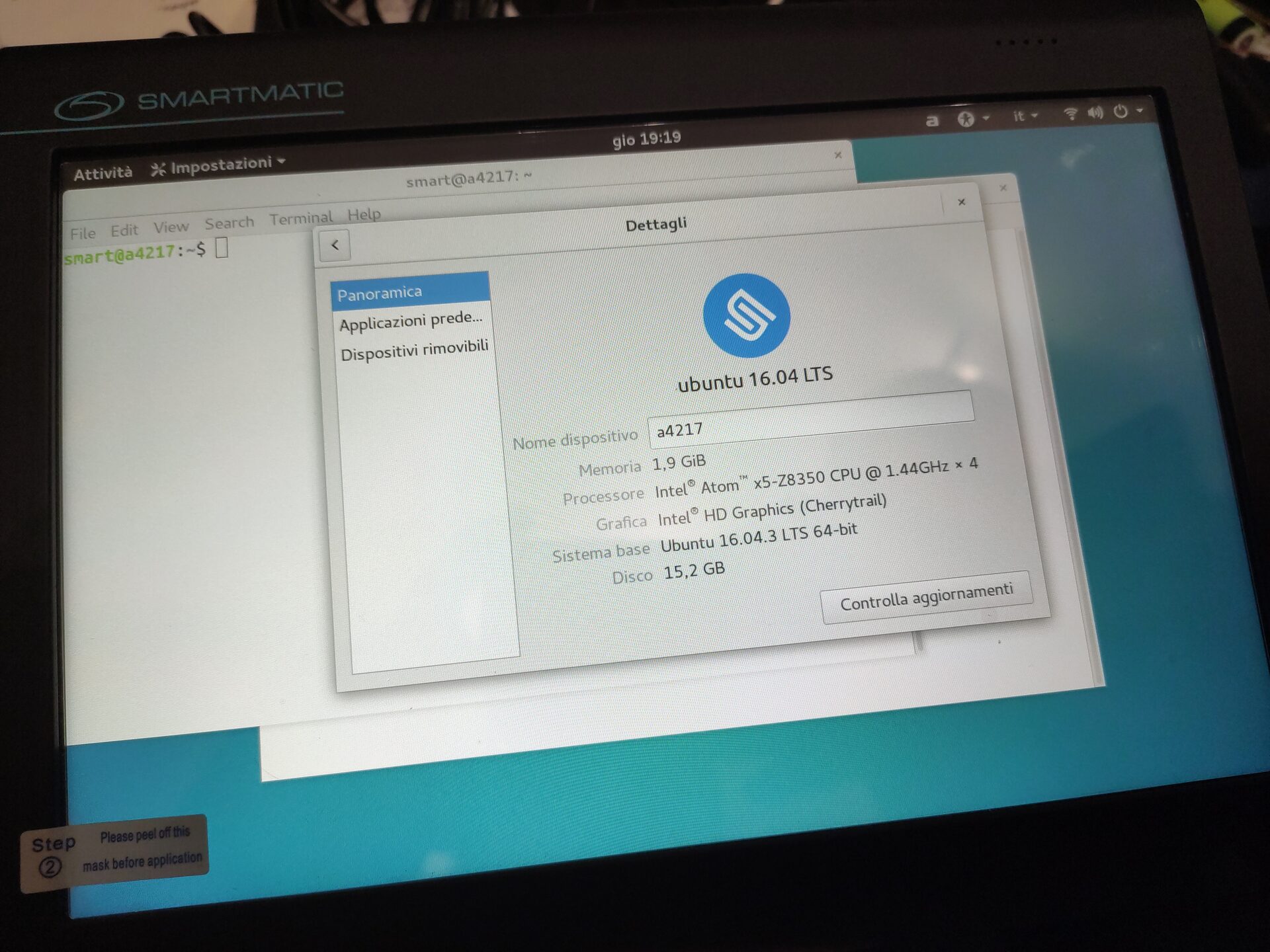
In summary, however, the Cherry Trail platform is known for having had problems with Linux, and to use it it is necessary to modify configuration files, blacklist kernel modules and recover the CUPS filters for the thermal printer from the original image.
The BIOS is password-protected, at least. Fortunately the password is public: smart?ecp.
Are they reusable?
Regione Lombardia provided these machines to schools, with the idea of using them as educational tablets. In reality, it is precisely “general” use where these machines fall short most of all.
Obtained for free or at a low price, they are interesting devices, but to them one must add the time and research needed to use them at their best. At the factory price or even just at €100 each, buying a normal tablet combined with a stand becomes much more convenient.
Of the 5 machines purchased, most are today in permanent operation in various applications where the form factor allows easy use and large computational capabilities are not necessary.
Two machines have been repurposed as a “management system” for a village festival. Paired with two Brother printers, they allow cashier operators to take orders and print tickets to give to visitors.
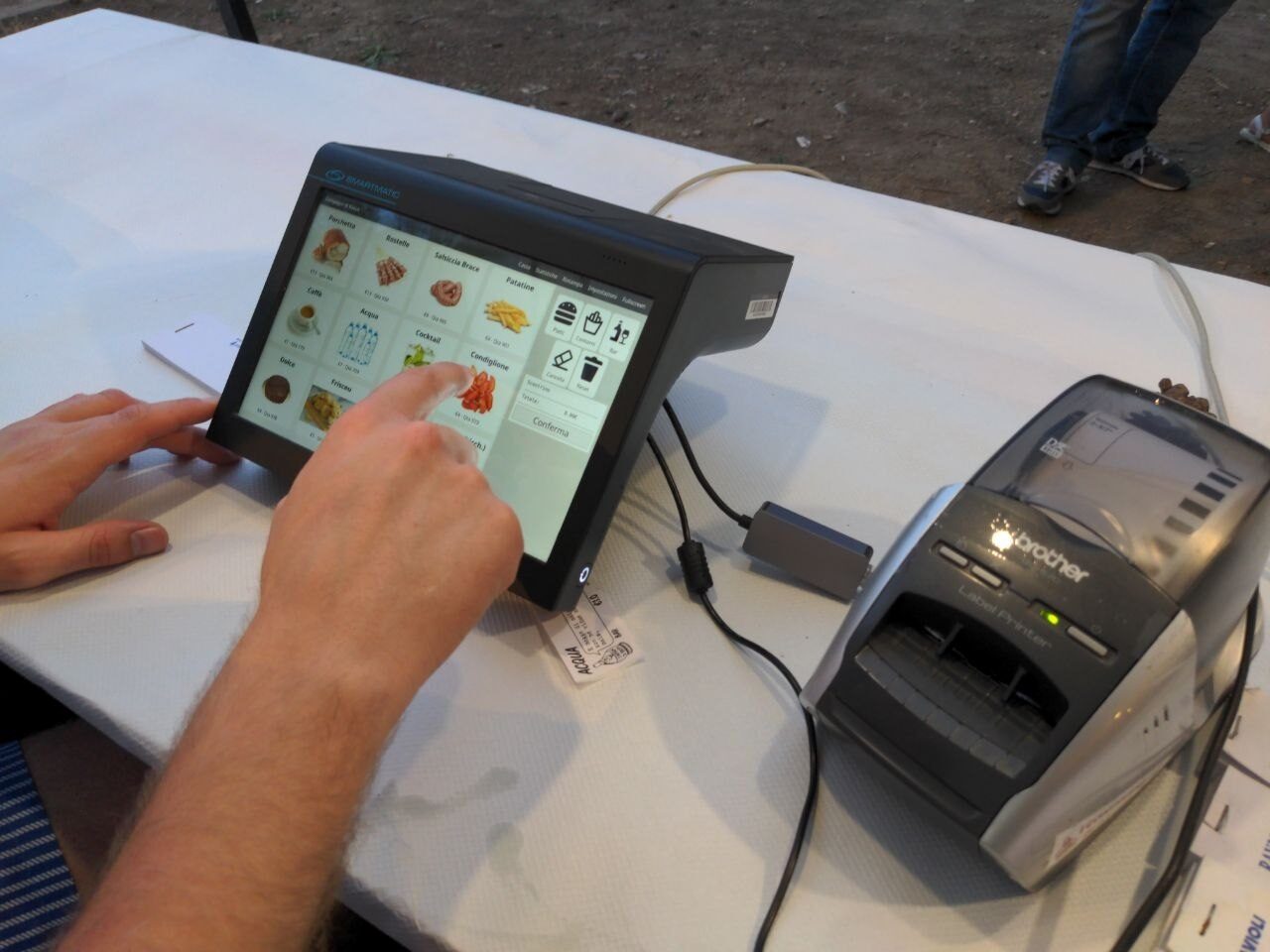
In this case, the built-in printer is not used because of its poor quality and the lack of an automatic cutter.
The other two machines, instead, have been repurposed in the audio-video expo field as interactive “totems”. By adding an internal NFC, each participant can scan their badge and perform various interactive operations, such as advancing the story and discovering character dialogues.
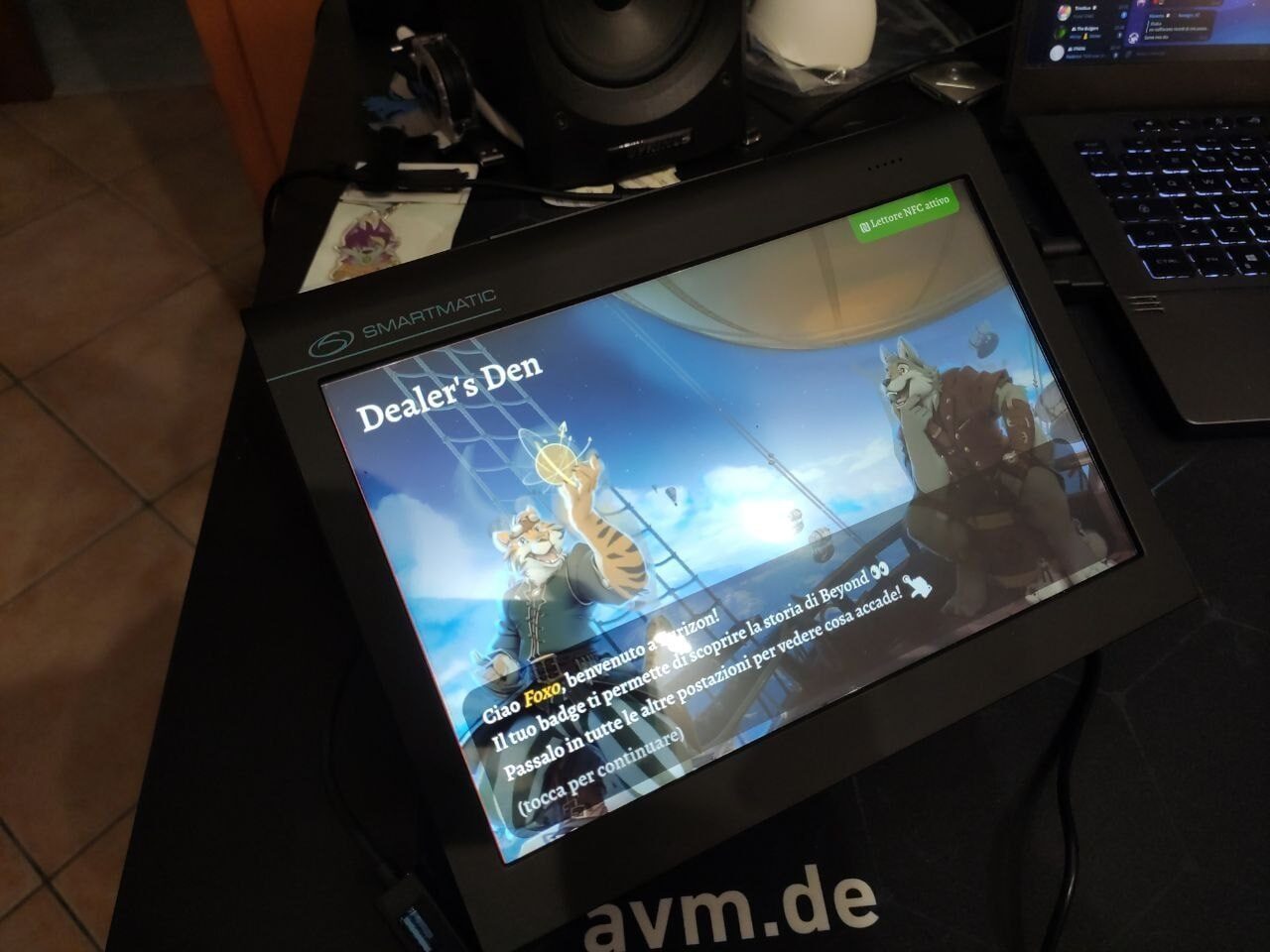
Ironically, the same interfaces criticized earlier (Ethernet, Wi-Fi, Audio…) are precisely those that made these applications possible, proving that the machines work and are reusable, but only when they do one single, well-specified thing.
The failed idea is that of formatting these devices with Ubuntu and giving them to schools. No Android apps, no Windows apps, and not enough memory to handle modern web applications.
Conclusion
Ignoring for a moment the cost to the public and considering only the technical part, the teardown reveals a machine built with components that were already modest at the time (2017) and inefficient choices.
From a security standpoint, the platform does not provide particular guarantees. A normal computer with TPM and Secure Boot would, paradoxically, be much more secure than a device of this kind created ad hoc.
Moreover, the internal (and undocumented) interfaces are an additional attack surface. In a voting system, what is the point of having a microphone connector, with the circuit already ready to mount one?
Implementing an electronic voting system remains one of the most difficult challenges. For the vote to be fair, it must be both anonymous and at the same time verifiable, two properties that are difficult to reconcile.
The purchase of “closed-box” systems from private and foreign companies creates opportunities for supply chain tampering that, taking this machine as an example, are not only theoretical, but even simple to carry out.
A simpler, air-gapped platform, based on a microcontroller or another embedded device, without the need to manage an entire computer, would have been more secure.
In Italy, for example, we use fiscal printers that express a similar concept: a sealed system verified by a state body. Many are built and assembled here, and seals and anti-tamper measures are mandatory. A voting machine should follow the same logic, not be based on a platform as extensive and complex as a modern PC.
The essential problem, however, is not hardware, but social: the most secure terminal in the world, without a chain of custody, certification, audit and training, becomes useless the moment the human enters the cycle. For fair and secure elections, a cultural change is needed: processes, governance, verification and above all responsibility of those who provide the system.
Disposal
Nearly ten years after the vote, the issue of recycling remains unresolved. Of the original equipment, only the power supply and the voting machine are still usable, while the power bank and the button are already e-waste. The power bank, which is completely sealed, is practically impossible to recycle properly, while the voting machine has already fallen victim to the passage of time and is barely usable for static applications.
In the end, on top of the 23 million spent, there is the bitterness of having ordered 24,700 “computers,” used them for a single day, and then instantly turned them into a hot potato to be passed back and forth between schools and agencies.
The entire set weighs 3.4 kg (2.0 kg for the machine, 1.4 kg for the accessories). Multiplied by the number of voting machines ordered, this amounts to 84 metric tons of lithium batteries, precious materials, circuit boards, and injection-molded plastics. Whether reused or not, those machines will end up in WEEE, and someone will have to pay for that disposal.
Thanks for reading!